

Brazilian Lymphatic Drainage Certification
for Clinical & Aesthetic Results
Advance your skills with a hands-on day of Brazilian lymphatic drainage techniques, built on the Level 1 training you already have. It’s taught in downtown Toronto using the LINFA™ Method, so your clients see a visible change and their nervous system stays settled.

Why This Training Matters
You already know how to move superficial lymph in a way that keeps the nervous system calm and respects the body’s metabolism. Now more of your clients are asking for aesthetic results too, and they want them without giving up the health benefits that brought them to lymphatic work in the first place. The Brazilian style is in demand across the wellness and beauty industry, and people ask for it by name.

This training teaches you how to meet that demand while keeping regulation first. You’ll learn to work within the body’s capacity and still deliver aesthetic results without compromising nervous system or metabolic health.
Common challenges our students face:
Clients ask for the Brazilian style by name and expect visible results from a single session.
You’d like to offer a more activating technique without undoing the regulation you learned in Level 1.
You’re not sure what to say when someone asks how long the results last, or whether the work reduces cellulite.
Some people arrive after cosmetic surgery, and you want to understand how fluid retention, healing, and scar tissue change the treatment.
What You’ll Learn
Deliver Aesthetic Results with Confidence, Autonomic Regulation, and Integrity
-
Offer aesthetic lymphatic work with confidence, knowing what it does to the nervous system and metabolism
-
Get clear on pressure, pacing, power, and fascial work
-
Support clients who want contouring or detoxification and are comfortable with a more activating technique
-
Trust your own judgment with people who arrive expecting a lot
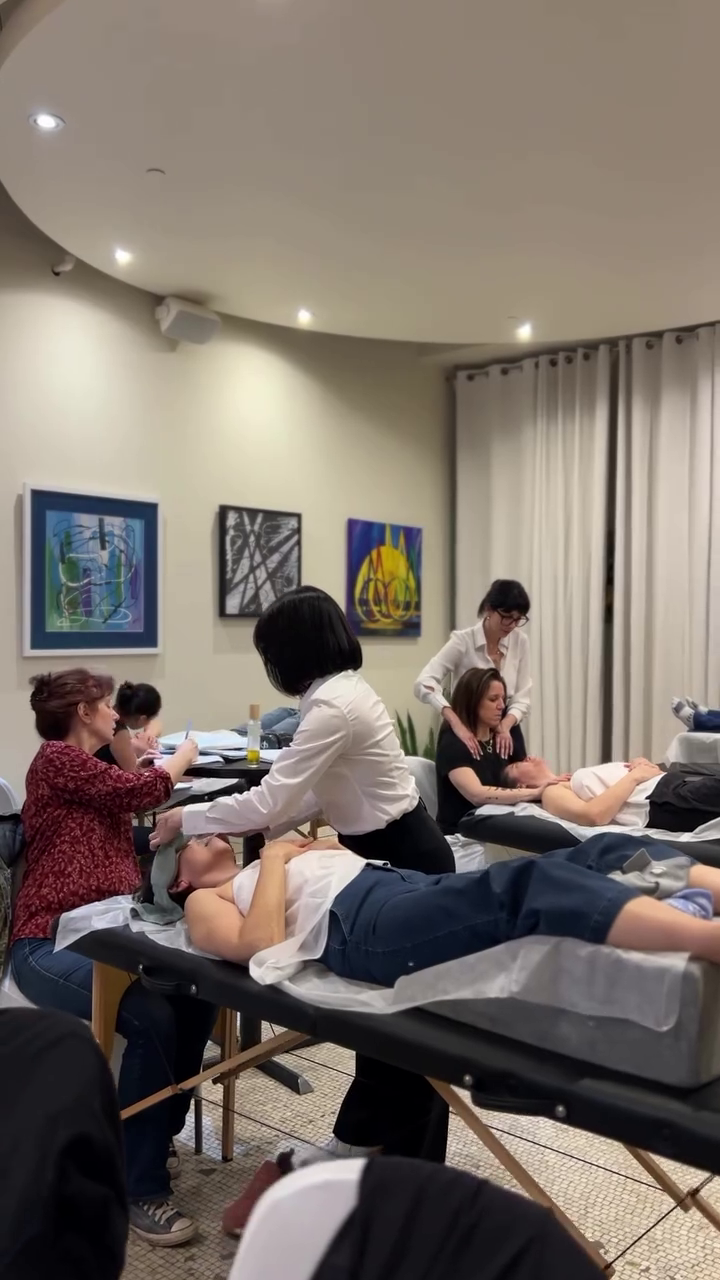
Over the day, you’ll cover:
The theory behind the Brazilian technique, and our philosophy for offering it
Pressure, speed, and precision, so the technique is more activating while still working within the body’s capacity
How to layer the Brazilian steps onto the superficial drainage protocols you learned in Level 1
Positioning, draping, and body mechanics that protect your client’s dignity and your own hands, wrists, and shoulders
Practitioner discernment, so you know which clients the technique suits and which need the gentler approach
How to describe real results in plain terms, from fluid retention and puffiness to how long the change lasts, and how to handle before-and-after photos ethically

What You Can Expect
This is a one-day, in-person, hands-on training that adds the steps of Brazilian Lymphatic Drainage (BLD) to what you learned in Level 1 while keeping nervous system regulation at the centre. The day includes theory, our philosophy for offering our style of BLD, live demonstrations from the instructors, guided hands-on practice, and discussion. There’s an art to the pressure and the pace, and the power of the technique comes from both. You master them by doing, with the instructors beside you.
You’ll receive a comprehensive printed manual with photos and the steps of the technique, and a certificate of completion at the end of the day.
Classes are small so you get personalized attention, hands-on guidance, and your questions answered. You’ll also join a private mentorship group where you can ask questions and get ongoing guidance as you build the new skills into your business. The group runs for as long as your career does.
Questions are welcome, and we’d rather you integrate the work than rush it.
What’s Covered Over the Day?
It’s a comprehensive training in a single day, so the modules move at a steady pace.
-
Brazilian lymphatic drainage has a reputation for fast, visible results, which is why clients ask for it by name, and it’s often taught as body sculpting with little attention to what faster, firmer work does to the nervous system. You’ll learn where our version comes from, what it does in the tissue, and how it builds on the LINFA™ Method you learned in Level 1. You’ll come away with a clear framework for offering a more activating technique while protecting the regulation you’ve already learned to prioritize.
-
The Brazilian style is faster and firmer than classic MLD, so the nervous system can read it as a threat if the work is rushed or uneven. This module covers the principles that keep it regulating. You’ll learn to keep a steady, efficient rhythm without hurrying, to make the transitions between strokes and regions smooth and comfortable, and to spot the signs of sympathetic activation, the shift into fight-or-flight that shows up as held breath, bracing, or a client who has gone quiet and tense. You’ll also learn to set the pacing and traction of the superficial vessels so fluid keeps moving, and to keep the client comfortable through the more dynamic techniques.
-
Brazilian lymphatic drainage often works on areas clients feel self-conscious about, and it moves between regions more quickly than a Level 1 session does. This module covers how to position, drape, and support a client so they never feel exposed or embarrassed, rushed, unstable on the table, physically strained, or responsible for holding themselves together during treatment. A client who feels exposed can’t settle, so the setups and transitions you learn here protect their regulation as much as their dignity.
-
Arm work in the Brazilian style involves more movement and traction than the gentle strokes of Level 1, and the shoulder is easy to strain. This module covers how to support the arm throughout the treatment so it feels held rather than pulled, suspended, or strained. You’ll learn hand positions and body positions that give the arm full support while leaving you free to work, and how to move a client’s arm from one position to the next without asking them to hold it up.
-
We teach precision over aggression. Watersheds are the dividing lines that decide which way lymph drains in each part of the body, and you learned them in Level 1. In the Brazilian style, the pressure is firmer and the pace quicker, so it matters even more that each stroke sends fluid toward the right nodes. You’ll sharpen your watershed knowledge and learn to read the tissue under your hands, adjusting pressure and speed to what a client’s body can accept that day. Your instructors demonstrate the full sequence of techniques, and then you practise giving and receiving it with an instructor beside you.
-
Brazilian lymphatic drainage can be physically demanding when it’s performed improperly, and practitioners who learn it without attention to their own bodies feel it in their wrists, thumbs, shoulders, and lower back. This module is an in-depth look at practitioner ergonomics: how to stand, how to use your body weight instead of hand strength, how to set up your table and your room, and how to keep your own breath and rhythm steady through a session. The aim is a technique your body can keep up with for years.
-
Clients who come for aesthetic results are whole people, and body image, inflammation, chronic illness, trauma, hormonal change, and surgical recovery can all be part of why someone is on your table. You’ll learn to choose language that is respectful, non-shaming, realistic, and free of exaggerated claims, to describe what the technique does in plain terms, from fluid retention and puffiness to how long the change lasts, and to answer the questions about cellulite, inches, and body shape that come up. Clients should feel supported, never objectified or “assessed.”
-
Before-and-after photos have long been part of how Brazilian lymphatic drainage is marketed, and many clients and practitioners are moving away from them as people come to lymphatic work for their health rather than for body composition. This module covers our recommendation: offer photos only when a client asks for them, take them on the client’s own phone to keep professional boundaries clear, and treat imaging as educational, observational, collaborative, and, most importantly, optional. You’ll learn how to handle the request when it comes and how to talk about results without a camera.
-
The day closes with the perspective that ties the modules together: treatments that honour a client’s goals, preserve their dignity, support nervous system regulation, respect the body’s capacity, and protect your own. You’ll leave with a way to decide which clients the technique suits, which need the gentler approach, and how to offer it with confidence. If you’re ever unsure about a client, you can ask in the mentorship group.
-
Graduation is just the beginning, and our commitment to you doesn’t end when the course does. You’ll have access to our private mentorship group with the founders for support and guidance as you refine the techniques. Bring your questions by text, video, or voice note, whether they’re about a stroke, a client you’re unsure of, or pricing strategies for your business.
Who This Is For
Designed for TLA Alumni Ready to Expand Their Clinical and Aesthetic Skillset
TLA Level 1–trained Practitioners
Practitioners Supporting Clients’ Aesthetic Goals
Registered massage therapists, aestheticians, nurses, and other health and wellness professionals who hold Level 1 all have access to this certification. People discover the Brazilian style on social media and ask whether you offer it, and it has become one of the most requested treatments in the beauty industry. If this kind of work is your passion, this course gives you the skills and techniques to add it to your menu, with the clinical reasoning from Level 1 underneath, and you’ll discover when it’s suitable for the person on the table.
Your Lymphatic Training Pathway
Level 1 Foundation MLD Training comes first, and it’s the only prerequisite for this certification. The three one-day advanced trainings, Functional Lymphatics, Peri-Op & Fascial Care, and Glymphatics, lead to the Lymphatic Drainage Specialist Certificate, and you can take this training before, between, or after them. Level 1 graduates who have been treating for a while can also join the LINFA™ Refinement Lab to sharpen their skills, and clinics in Ontario can book private in-clinic training.
Bundle & Save
This course isn’t part of our bundle pricing. If you still need Level 1, or you’d like to complete the advanced pathway, our Level 1 bundles and alumni bundles cost less than taking the courses one at a time and come with a year of workshop discounts.
FAQs
-
No. This certification is open only to TLA alumni who have completed Level 1 Foundation MLD Training. Everyone in the room needs the same grounding in nervous system regulation before adding a more activating technique on top of it, and the shared training keeps treatments consistent from one graduate to the next. Level 1 has no prerequisite of its own and runs most months.
-
Bring a bikini to wear during the practical portion of the training. It gives everyone privacy while you work on each other. Review your Level 1 notes beforehand, especially the full-body protocol, and trim long nails before class.
-
Not as a standalone certification. Licensed practitioners of other modalities, such as RMTs, may be able to bill MLD through insurance. Check with your college or association and your insurer to be sure.
-
Brazilian lymphatic drainage massage is a style of MLD that developed in Brazil’s wellness and beauty industry. Its power comes from firmer pressure and a faster pace than the classic technique, and it’s known for immediate visible results: less fluid retention, less puffiness, better circulation, and smoother-looking skin. It’s often sold as body contouring, and the people who ask for it by name are usually looking for exactly that. Thaís began her lymphatic education in Brazil in 2018 under Renata França, and the techniques here come from that tradition, taught through the LINFA™ Method so that regulation comes first.
-
Pressure and pace, mostly. Classic MLD uses light, rhythmic movements to support lymphatic flow. Brazilian lymphatic drainage combines more vigorous lymphatic activation with body contouring, so clients feel and see the work. Vodder is the right training for lymphedema, and the Brazilian style is the right training for sculpting. The LINFA™ Method is what we built for everyone in between, and this training adds the Brazilian layer as an advanced method for the people who want it.
-
It depends on what the client means by “work.” For fluid, yes. MLD reduces fluid retention and swelling, which is why it’s used after surgery while the tissue is healing. Most people see less puffiness after a session, and many say they feel lighter. It doesn’t remove fat or permanently reshape anything. Its power is in moving fluid, and part of this training is learning to say so in plain terms.
-
The immediate change comes from fluid moving, so it fades as fluid returns, usually within a few days. Results have more staying power with a series of sessions and with what the client does in between: walking, diaphragmatic breathing, water, sleep, and a reminder to elevate the legs if that’s where they hold fluid. You’ll learn to explain this before the first session, so nobody expects one treatment to transform them.
-
People who come for contouring get the same wellness benefits as anyone else on your table. The treatment can boost circulation, ease swelling and inflammation, settle the nervous system, and support overall wellness. Many describe the work as detoxification. In physiological terms, the lymphatic vessels carry excess fluid, proteins, and cellular waste out of the tissues, and hands-on work supports that process. You’ll learn to explain it that way.
-
In Ontario, MLD isn’t a regulated modality, so there’s no government licence, and each school sets its own entry requirements. Across the industry, prerequisites for Brazilian training often include a background in massage therapy or aesthetics. At Toronto Lymphatic Academy, the prerequisite is our Level 1 course, which has none of its own. Training still matters, especially with people recovering from surgery, and some liability insurers ask for proof of it before they cover lymphatic treatments. If you hold a regulated designation, your college’s standards apply to how you offer and advertise the work, and the title “massage therapist” is protected in Ontario.
-
No law requires it, and there’s no official certification authority for it in Canada. Certification varies by method and school, and programs like this one are designed for beauty and wellness professionals. A certificate of completion from a program like this one elevates your standing with referring practitioners, because it shows you learned the techniques, the contraindications, and the safety protocols from founders whose expertise comes from the tradition. Certification alone doesn’t give you a licence for body contouring, and it doesn’t change what your designation allows you to call the service.
-
Across the wellness and beauty industry, certification in the Brazilian technique takes one to two days of hands-on training. Ours is one day, 10 am to 6 pm, at Hotel Victoria, and you receive your certificate of completion at the end of it. Level 1 is two days, and it runs most months. This training runs on the dates listed below, so plan to complete Level 1 ahead of the date you want.
-
The Lymphatic Drainage Specialist Certificate is Toronto Lymphatic Academy’s own credential. You earn it by completing Level 1 and the three advanced trainings: Functional Lymphatics, Peri-Op & Fascial Care, and Glymphatics. That’s five days of in-person study, and you can take them at any stage of your career. This course sits outside that pathway, so it’s an addition rather than a requirement. If you’re a regulated professional, check how your college lets you use the word “specialist” in your advertising.
-
Certified lymphedema therapists treat lymphedema, a long-term swelling that needs medical management, and they train in Complete Decongestive Therapy through specialized programs of 135 hours or more. Each program sets its own fees and entry requirements, and many look for regulated health professionals. Toronto Lymphatic Academy doesn’t offer that certification. Our trainings, including this one, are for the wellness, aesthetic, and post-surgical work most practitioners do.
-
Some schools offer online or hybrid classes and certify you after video lessons. This course is in person, because you master pressure and speed by hand, with an instructor watching. If you’d like an introduction to our teaching first, the free 15-Minute Lymphatic Movement Framework is online.
-
Our two founders teach every class together. Thaís R. Álvs began her lymphatic education in Brazil in 2018 under Renata França. She holds certifications with Joana Medrado in post-operative care and Nany Mota in fibrosis management, and later trained at Dr. Vodder’s International School and the Academy of Lymphatic Studies. Her work with patients includes oncology, fertility, pregnancy, and surgical recovery. Cassandra Hope is a Registered Holistic Nutritionist and Certified Lymphatic Specialist with more than twenty years in clinic, focused on gut health, brain health, and post-concussive care. They developed the LINFA™ Method together, and both treat patients at Longév Clinic, the Academy’s home.
-
Tuition is $777. Klarna payment options are available at checkout, and Klarna sets the eligibility and terms. This course isn’t included in bundle pricing.
-
Many participants travel from across Ontario and Canada for our trainings. If you’re one of them, you may be eligible for a special rate at Hotel Victoria, our venue, instead of the public rate at the time of booking. We’ll email you the booking details once you’ve registered.

What our alumni have said…

Ready to Expand Your MLD Skillset With Confidence?
This in-person certification is for TLA alumni who want to add aesthetic lymphatic techniques to their work while keeping the nervous system regulated and the body’s capacity in mind.
Prerequisite
Level 1 Foundation MLD Training
Content Delivery
In person at Hotel Victoria,
56 Yonge St, Toronto, ON M5E 1G5
PAYMENT METHODS


In-Person Training: 1 day, 10 am - 6 pm
About This Course
This advanced certification builds on your Level 1 foundation and teaches you how to layer aesthetic lymphatic techniques onto your superficial drainage protocols safely. The focus is on pressure, speed, sequencing, and knowing which clients the technique suits, so the results last and the nervous system and metabolism stay protected.
Payment Plans
Flexible payment options are available through Klarna at checkout. Simply select Klarna to view the payment options available to you. Eligibility, payment terms, and any applicable interest are determined by Klarna.